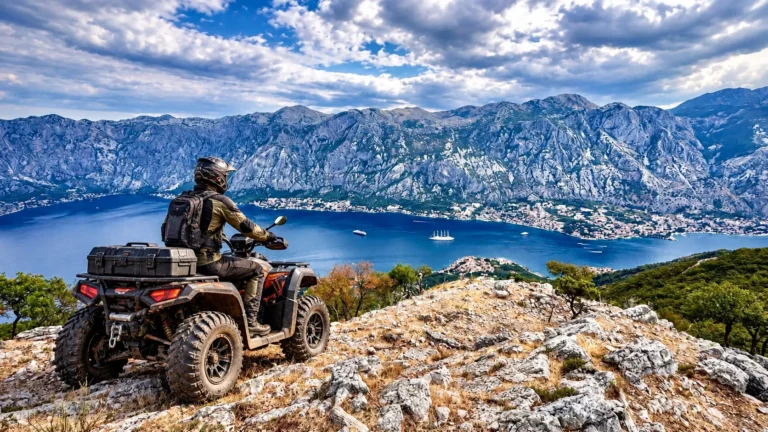
Lovćen is the mountain that rises straight out of the Bay of Kotor and closes the view behind Cetinje. For Montenegrins it is much more than a mountain: it is a national symbol, and its second highest peak holds the tomb of the country's most famous poet and ruler. Lovćen National Park protects the highest part of the massif, and it is one of the easiest national parks to reach from the coast.
This guide covers what to see in Lovćen National Park, how to visit the Njegoš Mausoleum, how to get there from Kotor, Budva and Cetinje, and how to explore the park's forest tracks by quad.
Lovćen National Park at a glance
- Protected since: 1952
- Area: about 6,220 hectares
- Highest peak: Štirovnik, 1,749 m
- Mausoleum: on Jezerski vrh, 1,657 m
- Nearest towns: Cetinje, Kotor, Budva
- Best time: May to October
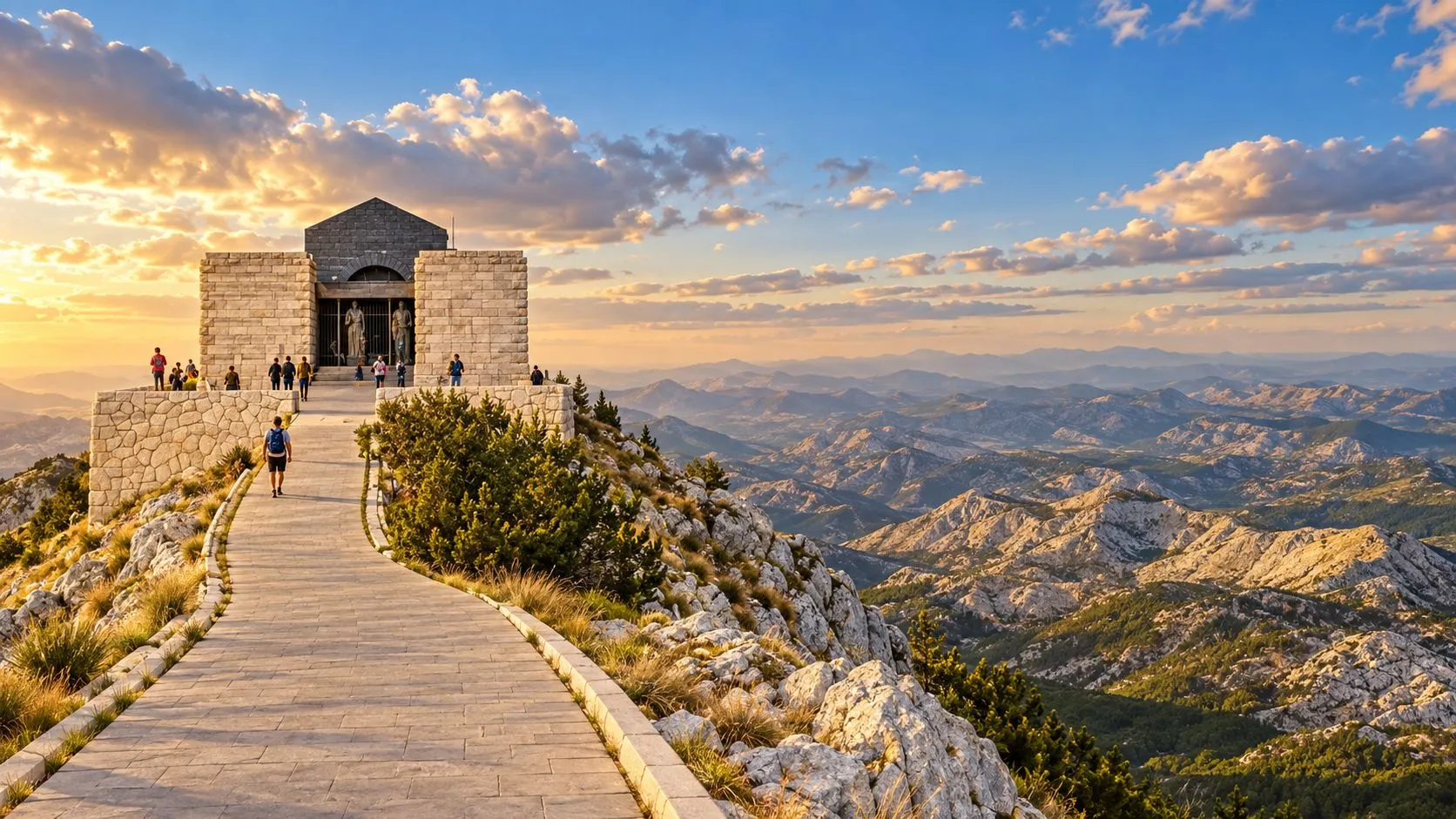
The Njegoš Mausoleum on Jezerski vrh
Petar II Petrović Njegoš (1813 to 1851) was the prince-bishop of Montenegro and the author of The Mountain Wreath, the best known work of Montenegrin literature. He asked to be buried on Lovćen, and today his mausoleum stands on the summit of Jezerski vrh. The building you see was designed by the sculptor Ivan Meštrović and completed in the 1970s, replacing an older chapel.
From the car park you climb 461 steps, most of them inside a tunnel cut through the rock. At a steady pace it takes 10 to 15 minutes. Inside the mausoleum a large granite statue of Njegoš sits under a golden mosaic ceiling. Behind the building, a path leads to a round viewing platform at the edge of the summit, with views over a great part of Montenegro, including the Bay of Kotor and, on clear days, Skadar Lake.
Tickets and opening times: you pay a small entrance fee for the national park and a separate ticket for the mausoleum. According to the National Museum of Montenegro, the mausoleum is open daily from mid-April to mid-November and closed in winter, so check the current hours before you go.
Ivanova Korita and the forests of Lovćen
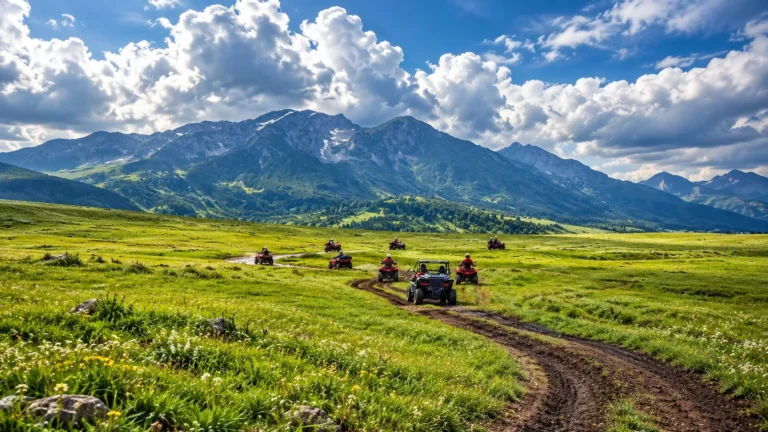
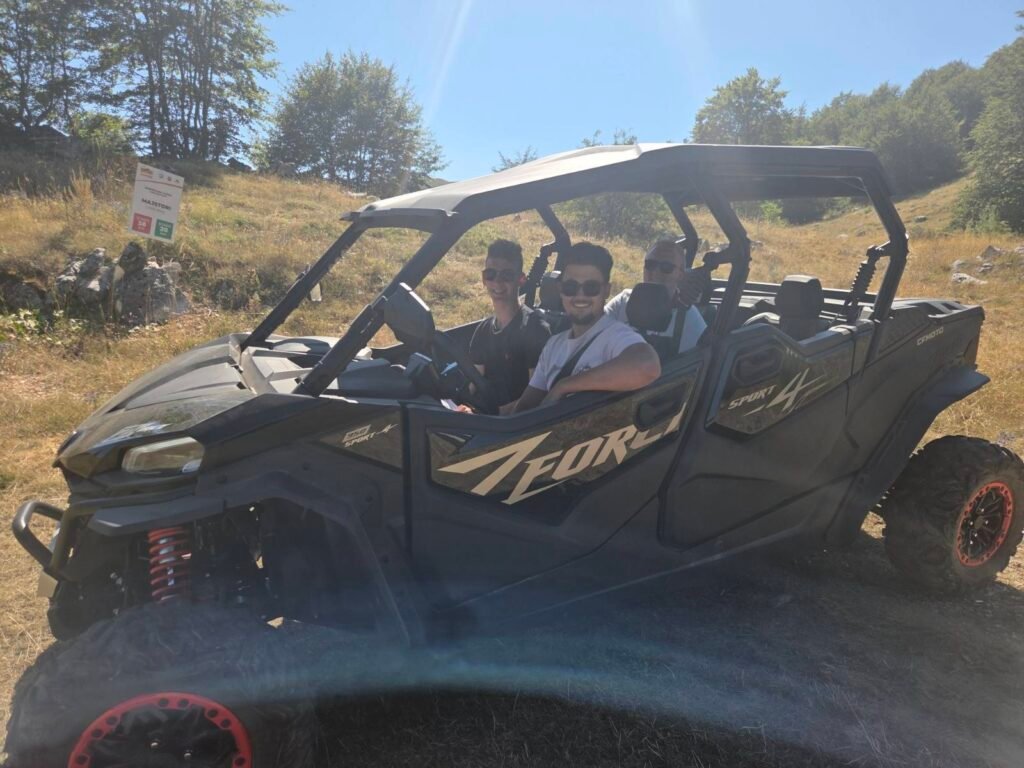
Ivanova Korita is a wide meadow surrounded by beech and pine forest on the eastern side of Jezerski vrh, at about 1,260 m. It is home to the park's visitor centre, an adventure park and plenty of picnic spots, and in summer it is usually several degrees cooler than the coast.
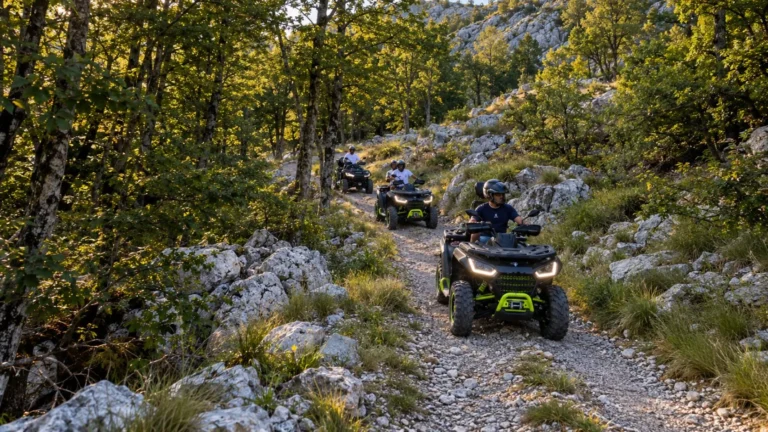
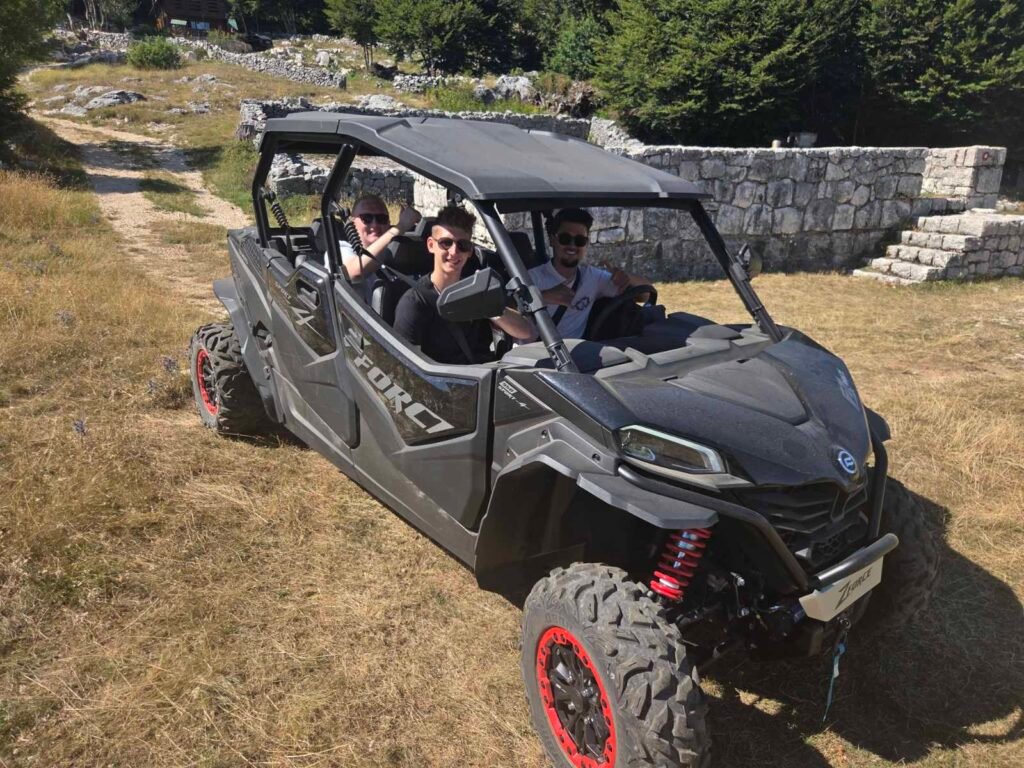
The forest tracks around Ivanova Korita are the best part of Lovćen for off-road riding. The Lovćen Forest Off-Road Trail covers about 20 km of forest roads in roughly 1 hour 15 minutes. It is a good choice if you want trees, fresh air and a bit of mud rather than big viewpoints.
Njeguši: prosciutto, cheese and the road down to Kotor
Njeguši is a village on a high karst plateau between Kotor and Lovćen. Njegoš was born here, and the village is famous across the Balkans for its smoked prosciutto (Njeguški pršut) and cheese. Several family taverns along the road serve both, so plan a short stop.
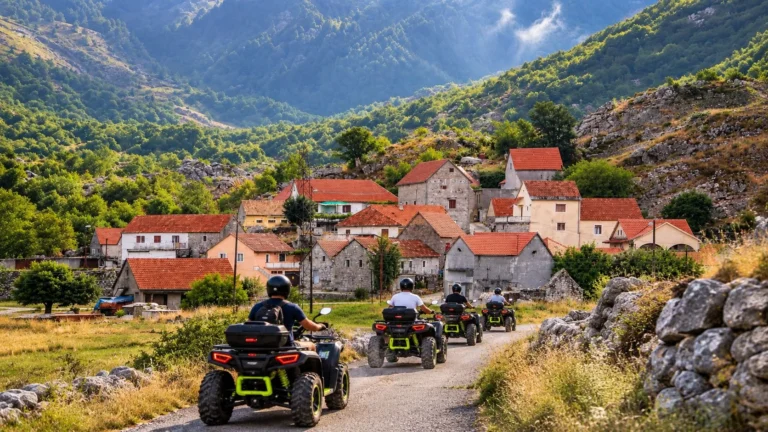
The Njeguši Village & Viewpoint Tour is a 1 hour, 18 km quad ride through the village and up to a panoramic viewpoint. It is the shortest of the Lovćen tours and fits easily into a day trip.
How to get to Lovćen National Park
From Kotor
The famous Kotor serpentine climbs from the bay to Njeguši in more than 20 hairpin bends, then continues into the park. It is narrow and busy with buses in summer, so take it slowly and use the pull-outs for photos. A cable car from Kotor also climbs to the edge of the park, but from its top station you still need a road transfer to reach the mausoleum.
From Cetinje
Cetinje, the old royal capital, is the closest town to the park, only a short drive below Ivanova Korita. It is worth an extra hour or two for its museums, former embassies and the Cetinje Monastery.
From Budva
From Budva the quickest way is via Cetinje. Many visitors drive up through Cetinje and down the serpentine to Kotor, which turns the trip into a scenic loop.
Exploring Lovćen by quad
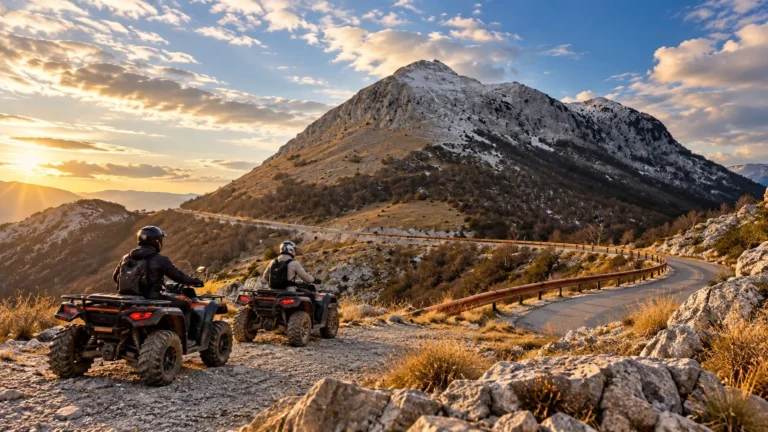
Lovćen has three guided quad tours, all with an experienced local guide:
- Lovćen Mausoleum Quad Tour: about 1.5 hours and 15 km. The guide waits while you climb the 461 steps and visit the mausoleum. Mausoleum tickets are paid on site.
- Lovćen Forest Off-Road Trail: about 1 hour 15 minutes and 20 km on forest tracks.
- Njeguši Village & Viewpoint Tour: about 1 hour and 18 km to the village and a panoramic viewpoint.
Tours run all year, but winter routes depend on snow. A buggy for up to four people is also available on request. See all the options and prices on the Lovćen & Cetinje tours page.
When to visit and what to bring
The best months are May to October. Mornings are usually clearer, and clouds often build up around the summit in the afternoon, so go early if the view is your main goal. Even in July the top of Lovćen is noticeably cooler and windier than the coast, so bring a warm layer. From November to April expect snow on the higher roads and remember that the mausoleum is closed in winter.
- A light jacket, even in summer
- Comfortable shoes for the 461 steps
- Cash for the park entrance and local food stops
- A car driving licence if you want to drive a quad
Frequently asked questions
How much time do you need for Lovćen National Park?
Half a day is enough for the mausoleum and Njeguši. A full day lets you add Cetinje, a forest walk or a quad ride around Ivanova Korita.
Is the climb to the Njegoš Mausoleum difficult?
Not really. There are 461 steps, but they are evenly spaced and mostly in a sheltered tunnel. Most people manage them in 10 to 15 minutes.
Can you visit Lovćen in winter?
Yes, the park is open, but the mausoleum is closed from mid-November to mid-April and the higher roads can be covered in snow. Winter quad routes depend on the conditions on the day.